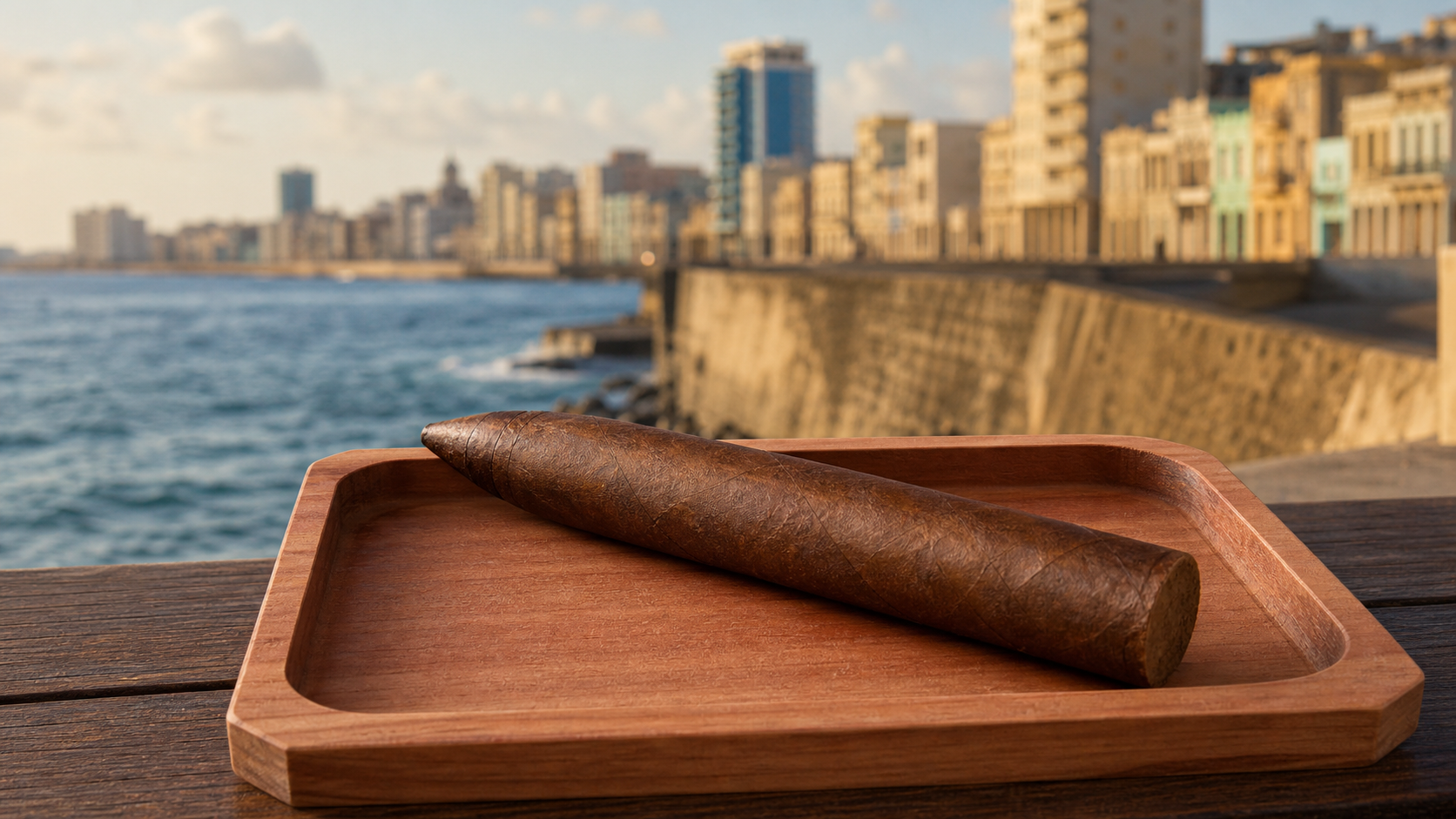
Cuban cigar
Montecristo No. 2
A benchmark Cuban pyramid with cedar, cocoa, coffee, leather, cream, and earthy spice.
Generated editorial image; not official product photography.
Identity
Cigar card
- Brand
- Montecristo
- Cigar name
- No. 2
- Origin
- Cuba
- Line
- Core line
- Length
- 156 mm / 6 1/8 in
- Ring gauge
- 52
- Vitola de galera
- Piramides
- Commercial size
- Pyramid
- Release
- Pre-1960
- Status
- Current Regular Production
- Construction
- Handmade
- Smoking time
- 75-105 minutes
Packaging
- Dress box of 25
- Cabinet of 25
- Tubed formats in some markets
Identity note
Cuban Cigar Website identifies the Montecristo No. 2 as a current regular-production handmade Cuban cigar in the Piramides factory vitola, 52 ring gauge x 156 mm. It is one of the classic post-revolution regular-production Montecristo sizes and remains a reference point for Cuban pyramids.
General profile
The Montecristo No. 2 is one of the most recognizable Cuban cigars because it combines a generous format with a classic Montecristo flavor range: cedar, cocoa, coffee, cream, leather, earth, and pepper. At its best, it is structured rather than loud, with a slow movement from creamy wood into darker coffee and leather.
Pre-light
Wrapper aroma: cedar, cocoa, barnyard, dry earth, and sweet tobacco.
Cold draw: cocoa powder, cedar, light coffee, hay, and a touch of pepper.
First third
Primary notes: cedar, cream, cocoa, light coffee.
Secondary notes: hay, almond, white pepper, sweet tobacco.
Body: medium.
Strength: medium.
Texture: creamy, aromatic, and broad.
The opening is typically elegant and recognizable: cedar and cocoa sit up front, supported by a creamy coffee tone. The tapered head can concentrate the draw, so a conservative cut is useful.
Second third
Primary notes: coffee, cocoa, cedar, leather.
Secondary notes: earth, toasted nuts, pepper, baking spice.
Body: medium-full.
Strength: medium.
Texture: denser, rounder, and more savory.
The middle third is the main event. The sweetness becomes darker, the coffee note deepens, and the cigar gains leather and earth. A good example keeps the Montecristo creaminess even as the profile becomes more serious.
Final third
Primary notes: leather, coffee, earth, cedar.
Secondary notes: cocoa, black pepper, toasted tobacco, dry spice.
Body: medium-full.
Strength: medium-full.
Texture: warm, leathery, and concentrated.
The final third moves into a darker Cuban register. Coffee and earth become more prominent, and pepper can rise on the retrohale. It rewards slow pacing; heat can flatten the cocoa and cream.
Construction
Draw: usually medium, with variation from firm to open.
Burn: generally good but can need touch-ups because of the large tapered format.
Smoke output: medium to generous.
Heat: manageable if paced slowly.
Overall assessment
Complexity: high when the cigar is well stored.
Evolution: clear movement from creamy cedar and cocoa toward leather, coffee, earth, and pepper.
Best use: a full evening Cuban pyramid and a useful benchmark for comparing other Habanos.
One-line tasting note
Cedar, cocoa, cream, coffee, leather, earth, and pepper in a classic medium-full Cuban pyramid.